
Every workshop needs a heart. For the carpenter, it might be the table saw; for the mechanic, the lift. But for the general DIYer, the maker, and the repair specialist, the heart of the shop is undoubtedly the bench vise.
A vise is more than just a clamp; it is a third hand that never gets tired, a stabilizer for heavy torque, and a precision holder for delicate filing. However, a vise is only as good as its connection to your workbench. A loose, wobbly, or poorly positioned vise can ruin projects, damage your workbench, and even cause injury.
If you have recently purchased a new vise or are looking to upgrade your current setup, you have come to the right place. In this comprehensive guide, we will walk you through exactly how to mount a bench vise effectively. We will cover everything from the physics of placement to the specific hardware you need to ensure that vise never budges.
Strategic Placement – Where Does the Vise Go?
Before you drill a single hole, you must determine the optimal location for your vise. This is not a decision to take lightly, as moving it later will leave your bench top riddled with unsightly holes.
1. The Corner vs. The Middle
The vast majority of experts recommend mounting a vise on the corner of the workbench, specifically over a table leg.
- Stability: The corner, directly above a leg, is the most structurally sound part of the bench. It transfers the downward force of hammering directly into the leg and the floor, rather than bouncing the tabletop.
- Clearance: Mounting on the corner allows you to clamp long vertical items (like pipes or lumber) without them hitting the workbench legs or supports.
- Range of Motion: Most bench vises have a swivel base. A corner mount allows the vise to rotate nearly 180 degrees without the handle hitting the bench, giving you maximum versatility.
2. Handedness Matters
Your dominant hand dictates which corner you should choose.
- Right-Handed Users: Mount the vise on the left corner of the workbench. This allows you to hold a tool (like a saw or file) in your right hand while stabilizing the workpiece with your left hand near the vise.
- Left-Handed Users: Mount the vise on the right corner.
3. The “Knuckle Check”
When positioning the vise, ensure the stationary jaw (the back jaw) extends slightly past the edge of the workbench. If the jaw is flush or recessed, you will not be able to clamp long vertical objects because they will hit the front of your bench.
Pro Tip: Place the vise so the rear jaw overhangs the bench edge by about 1/4 to 1/2 inch. This ensures vertical clearance while keeping the center of gravity as far back on the bench as possible.
Assessing Your Workbench
You cannot mount a 50-pound vise to a card table. The physics of torque require a sturdy foundation.
Weight and Stability
When you are sawing or wrenching on a piece clamped in the vise, you are exerting significant force. If your workbench is lightweight, the whole table will walk across the floor or tip over.
- The Fix: If you have a lighter bench, consider bolting the bench legs to the floor or the wall. Alternatively, add a bottom shelf to the workbench and stack it with heavy items (sandbags, tool cases, or scrap metal) to lower the center of gravity.
Bench Top Thickness
A standard 3/4-inch plywood top is generally insufficient for a heavy-duty mechanic’s vise. The bolts can tear through the wood under heavy load.
- Minimum Thickness: Aim for a bench top that is at least 1.5 to 2 inches thick.
- The Fix: If your top is thin, you don’t need to replace the whole bench. We will discuss adding a reinforcement plate in the installation steps below.
Gathering the Right Hardware
Many vises do not come with mounting hardware because manufacturers don’t know the thickness of your bench. Do not simply grab whatever drywall screws you have lying around. The hardware must withstand shear (sliding) and tension (pulling) forces.
The Bolt Standard
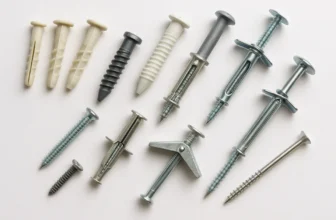
Use Grade 5 or Grade 8 bolts. You can identify these by the markings on the head (Grade 5 has three radial lines; Grade 8 has six). While standard hardware store bolts (Grade 2) work for light duty, a heavy vise requires stronger steel.
You Will Need:
- Carriage Bolts or Hex Bolts: The diameter should match the mounting holes in your vise (usually 3/8″ or 1/2″). The length should be the thickness of your bench top + thickness of the vise base + thickness of washers/nuts + 1 inch.
- Large Flat Washers: You need wide washers for the underside of the bench to distribute the pressure. Fender washers are excellent for this.
- Lock Washers: To prevent vibrations from loosening the nuts.
- Nuts: Standard hex nuts match your bolts.
- Reinforcement Wood: A piece of 2×6 or 3/4″ plywood (if your bench top is thin).
Why Not Lag Screws?
Avoid using lag screws (which screw directly into the wood from the top) unless you have absolutely no access to the underside of the bench. Lag screws can strip out of the wood over time due to the constant vibration and twisting forces applied to the vise. Through-bolting is always superior.
Step-by-Step Installation Guide
Now that we have the location and the hardware, it is time to mount the beast.
Step 1: Create a Template (Optional but Recommended)
Lifting a 40-pound vise repeatedly to check alignment is exhausting.
- Flip the vise upside down.
- Place a piece of cardboard over the base.
- Punch holes through the cardboard where the bolt holes are.
- Trace the outline of the base.
- Cut this out to use as your positioning template.
Step 2: Position and Mark
Place your template (or the actual vise) on the chosen corner.
- Check the Overhang: Ensure the static jaw overhangs the edge of the bench.
- Check the Handle: Insert the handle and spin it. Ensure it doesn’t hit the workbench edge or the wall behind the bench.
- Check Underneath: Look under the table. Ensure your drill holes won’t hit the table legs, framing, or any drawers.
- Mark the Holes: Use a sharp pencil or a center punch to mark the center of the mounting holes.
Step 3: Drilling the Holes
Accuracy is key here. You want the bolts to drop straight through.
- Pilot Holes: Start with a small drill bit (e.g., 1/8″) to ensure you are hitting your mark.
- Full Size: Switch to a bit that is the same size or 1/16″ larger than your bolts.
- Drill Perpendicular: Try to keep the drill perfectly straight up and down. If you have a drill guide, use it. If the holes are crooked, the bolts won’t sit flush against the vise base.
Step 4: The Reinforcement (The “Cheater Block”)
If your workbench top is less than 2 inches thick, you must reinforce the underside.
- Cut a block of 2×6 lumber or thick plywood that is slightly larger than the footprint of the vise base.
- Hold it under the bench and transfer the hole locations (or drill through your existing holes into the block).
- This block will act as a giant washer, sandwiching the workbench top and preventing the bolts from ripping through the wood during heavy torque applications.
Step 5: Fastening the Vise
- Place the vise over the holes.
- Drop the bolts through the vise base and the bench top.
- Go Underneath: Slide your reinforcement block (if used) onto the protruding bolts.
- Washer Stack: Place a flat washer (or fender washer) on next, followed by a lock washer.
- The Nut: Thread the nut on by hand.
- Tighten: Use a wrench on the bottom and a socket/wrench on the top. Tighten them sequentially (like changing a tire)—don’t fully tighten one bolt before the others are snug. This ensures the vise settles evenly.
Troubleshooting and Special Scenarios
Not all workbenches are created equal. Here are solutions to common mounting problems.
Scenario A: The “Skirted” Workbench
Some workbenches have a thick apron or skirt around the edge that makes the top look thick, but the center is thin. This skirt can block access to the underside for bolting.
- Solution: You may need to notch the skirt to make room for the washers and nuts, or use extra-long bolts that go all the way through the skirt (if the vise placement aligns with it).
Scenario B: Limited Space (Temporary Mounting)
If you use your dining table as a workspace or have a very small shop, you may not want a permanently mounted vise.
- Solution: Mount the vise to a thick piece of 3/4″ plywood (about 2ft x 2ft). Glue and screw a “cleat” (a strip of wood) to the bottom front edge of the plywood. To use the vise, place the plywood on your table with the cleat hooked over the front edge, and use two C-clamps to secure the back of the plywood to the table. When you’re done, unclamp it and store the whole unit on a shelf.
Scenario C: Uneven Castings
Cast iron vise bases are rough. Sometimes they don’t sit perfectly flat, causing them to rock even when bolted.
- Solution: Do not over-tighten to force it flat; you might crack the casting. Instead, use thin metal shims (or even pieces of a soda can) under the low spots to level the base before tightening the bolts.
Maintenance and Safety
Once the vise is mounted, a little maintenance ensures it lasts a lifetime.
The “Break-In” Period
Wood compresses over time. About a week after you mount the vise, and after you’ve used it for a few heavy projects, check the nuts underneath. You will likely find they have loosened slightly as the washers settled into the wood fibers. Retighten them. Check them again once a year.
Lubrication
The main screw and the slide bar need grease. Dry metal grinding on dry metal wears out quickly.
- Open the vise fully.
- Clean off old sawdust and grime.
- Apply a light coat of dry bicycle lube or standard lithium grease to the screw threads and the dynamic jaw slide. Avoid heavy, sticky grease if you work with wood, as it will attract sawdust and create a paste that jams the mechanism.
Jaw Inserts (Soft Jaws)
The serrated metal jaws of a bench vise are designed to grip steel pipes and bolts. They will mar wood, plastic, or aluminum instantly.
- DIY Upgrade: Make “soft jaws” by gluing heavy-duty magnets to blocks of wood or leather. Stick these inside the metal jaws when working on delicate projects to prevent surface damage.
Conclusion
Mounting a bench vise is a rite of passage for any workshop owner. It signifies a transition from casual repairs to serious fabrication and fixing. By taking the time to select the right corner, buying high-grade bolts, and reinforcing the underside of your bench, you create a workstation that is safe, solid, and ready for anything.
A properly mounted vise shouldn’t just hold your work; it should feel like an extension of the workbench itself—immovable and reliable. So, drill those holes straight, tighten those bolts down, and get ready to build something amazing.
Frequently Asked Questions (FAQ)
Q: Can I use lag screws instead of bolts to mount my vise? A: It is highly recommended to use through-bolts with nuts and washers. Lag screws rely on the threads gripping the wood. Over time, the vibration and twisting force of the vise will strip the wood fibers, causing the screws to pull out. Bolts offer much higher security.
Q: How high should my bench vise be? A: Ideally, the top of the vise jaws should be at elbow height. Stand naturally with your arms at your side, then bend your elbow 90 degrees. That is the ergonomic height for filing and sawing. If your bench is too low, you can mount the vise on a raised wooden block to reach this height.
Q: What size bolts do I need for a 4-inch vise? A: Most 4-inch to 6-inch vises use either 3/8-inch or 1/2-inch diameter bolts. Check the mounting holes on your specific vise base. For length, measure your bench thickness, add the vise base thickness, and add 1.5 inches to accommodate the washer, nut, and thread exposure.
Q: My workbench top is only 3/4 inch plywood. Is that enough? A: A 3/4 inch top is too thin for a heavy vise on its own; it will likely flex or crack. You must use a backing plate (a piece of 2×6 lumber or thick plywood) underneath the bench to distribute the load.
Q: Should I grease the base swivel? A: Yes. If your vise has a swivel base, it can seize up over time due to rust and dust. Occasionally loosen the locking handles, lift the vise slightly if possible, and spray a dry lubricant or inject a small amount of grease between the rotating surfaces.


Hi, I’m Charles Larson. We do everything we can to support our readers with hundreds of hours of research and comparison testing to ensure you find the perfect tool for your workshop.